From material selection to heating circuit design, manufacturing and final inspection — we deliver heaters optimized for your process, plus printed electronics made with the same fine-circuit printing technology.
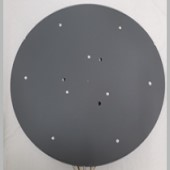
Aluminum nitride (AlN) offers one of the highest thermal conductivities among ceramics, with excellent electrical insulation. Using our own plating and printing processes, BH SEMICON forms ultra-fine heating circuits on AlN and brought heaters for semiconductor process equipment, where uniform temperature across the wafer is critical, into domestic production. We design and build freely to your process: 1 to 15+ zones, 110℃ to 400℃ operating temperature and 2T to 4T plate thickness.
| Item | Range |
|---|---|
| Zones | 1 zone – 15+ zones |
| Operating temperature | 110℃ ~ 400℃ |
| Plate thickness | 2T ~ 4T |
| Size · shape | Φ315 standard, customized to your specification |
| Process | Plating / Printing |
※ Within this range, we design and build the zone count, temperature, thickness and shape to your process conditions. Contact us to discuss detailed specifications.
Silicon carbide (SiC) keeps its strength at high temperatures and offers excellent corrosion and plasma resistance, making it ideal for harsh process environments. We have extended the circuit forming and bonding technology built up in AlN Heater production to SiC, providing heater solutions for high-temperature processes.
| Item | Details |
|---|---|
| Shape · size | Designed to your specification (round or rectangular) |
| Zone layout | Designed for your required temperature distribution |
| Detailed specs | Discussed through a technical inquiry |
※ SiC Heaters are custom-designed for each project. Tell us your process conditions and we'll propose the optimal specification.
A thermal camera shows the difference. The whole CNT-coated surface heats up at once, so instead of stripes along the wires like a metal-wire heater, it heats as one bright surface.
※ Illustration of a thermal image — actual temperatures and colors vary with product specifications and measurement conditions.
A surface heater with CNT (carbon nanotube) paste coated across the whole film. Unlike conventional wire heaters, where SUS or Ni-Cr wire is laid in a pattern and only the area around the wire gets hot, the entire coated surface heats evenly, giving uniform heat with no hot spots, fast heat-up and high efficiency. Its ultra-thin, flexible structure is supplied for apparel, e-cigarette, automotive and ESS applications; thickness depends on the application.
※ Thermal illustration — surface heating warms the whole coated area evenly, while wire heating only warms around the wires, causing temperature variation. Heat-up speed reflects measured comparisons in which surface heating is 2× faster than wire heating.
| Category | CNT surface heating (BH) | SUS · Ni-Cr wire heating |
|---|---|---|
| Heating method | Entire coated surface | Around the wire pattern |
| Temperature profile | Uniform (no hot spots) | Local overheating near the wires |
| Heat-up speed | Fast | Relatively slow |
| Thermal efficiency | High | Low |
| Thickness · flexibility | Ultra-thin · flexible | Limited |
| Category | Layer |
|---|---|
| Coverlay | PI Film |
| Adhesive | |
| Heating layer | CNT Paste |
| FCCL (single-sided, 3-layer) | Copper electrode |
| Adhesive | |
| Base Film | |
| Adhesive | PSA |
※ Typical example; layer and total thickness depend on the application (apparel, e-cigarettes, automotive, ESS) and specifications.
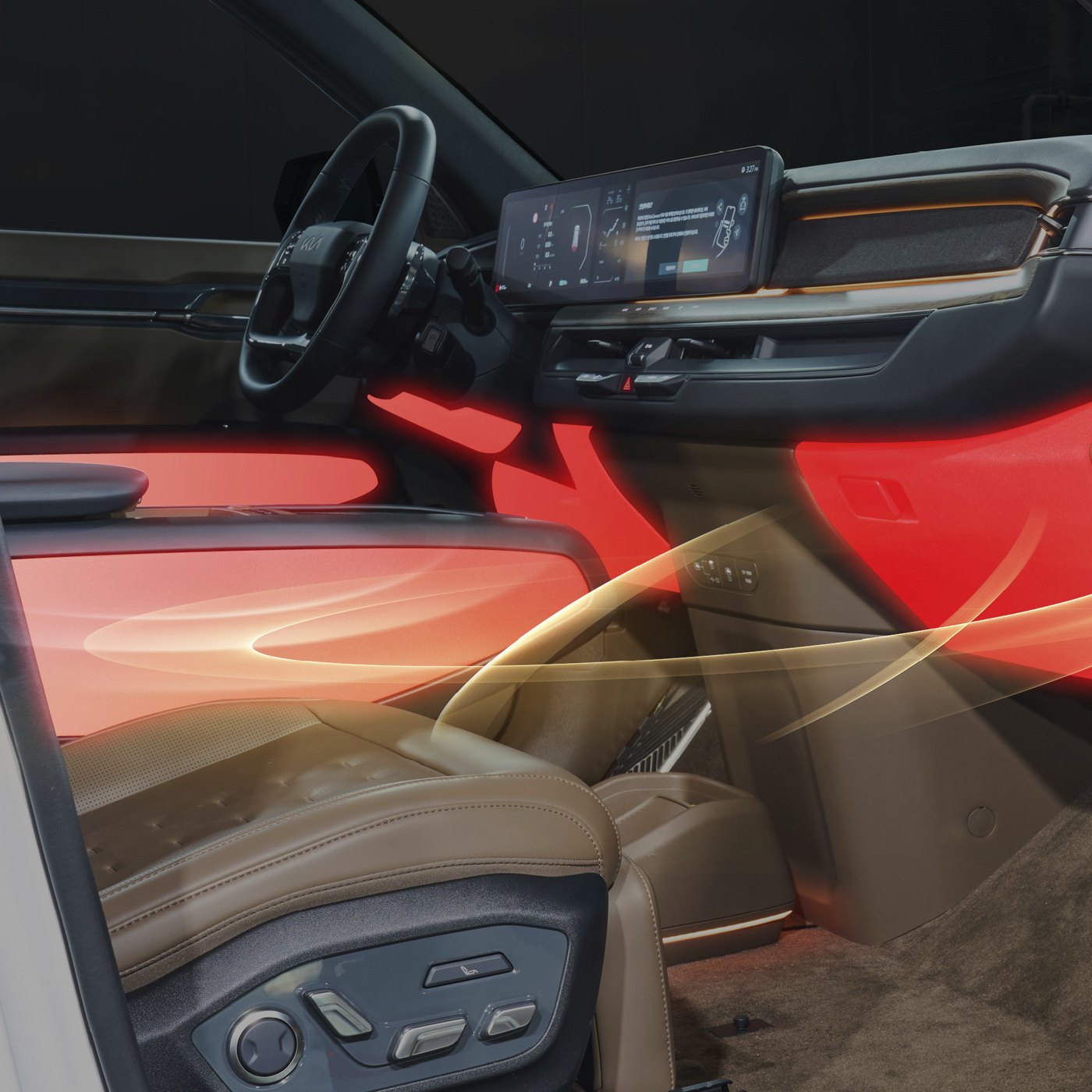
The CNT film heating element of the radiant heating system developed by Hyundai Motor Group. Its surface-heating structure, rather than wire heating, warms the cabin quickly and evenly; BH SEMICON took part in its development.
Image source: Hyundai Motor Group website (Korean) ↗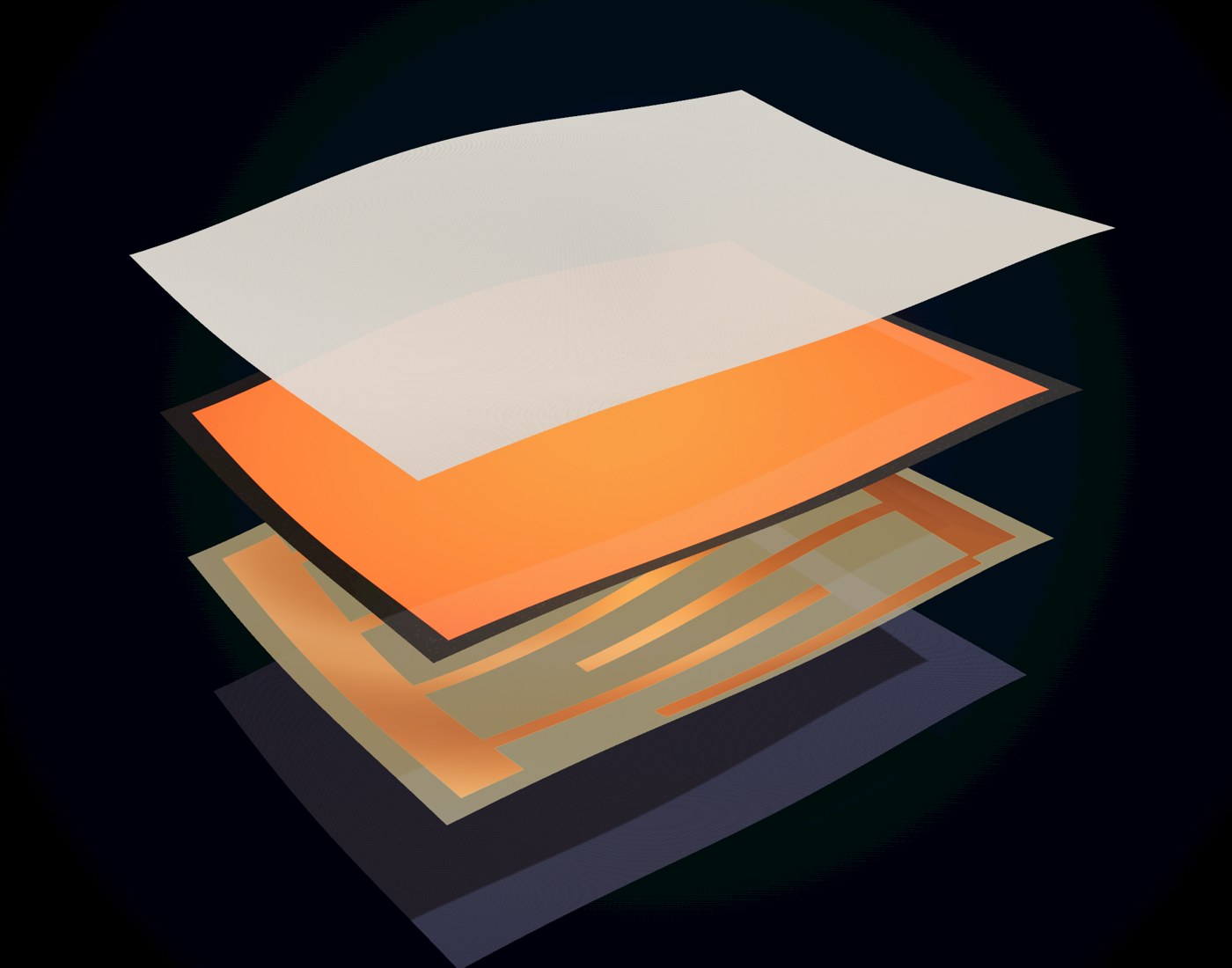
A four-layer structure: outer fabric – CNT surface-heating layer – copper electrode film – lining. The whole heating layer warms evenly for consistent comfort, and it is thin and flexible enough to bend with every movement of the garment.
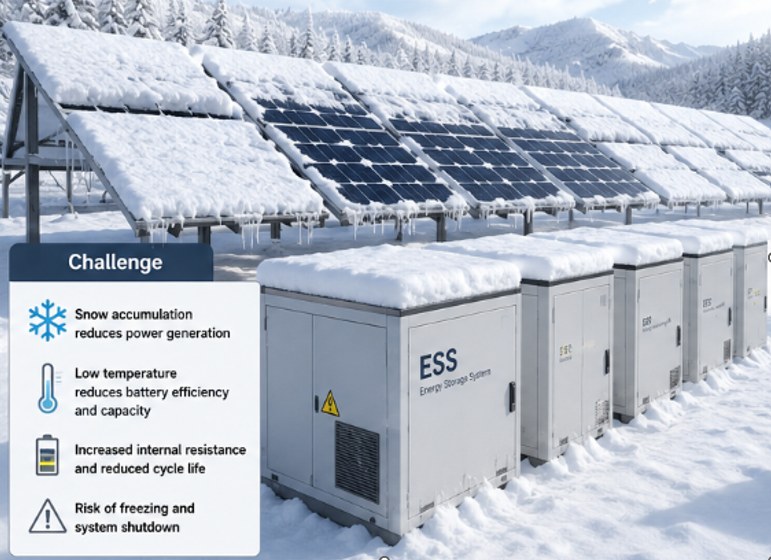
In extreme cold, an ESS (energy storage system) loses battery efficiency and capacity, its internal resistance rises and cycle life shortens, and freezing can shut the system down. A film heater mounted on the floor of the battery module housing keeps the cells preheated and warm, and as a thin film it takes up almost no space inside the module.
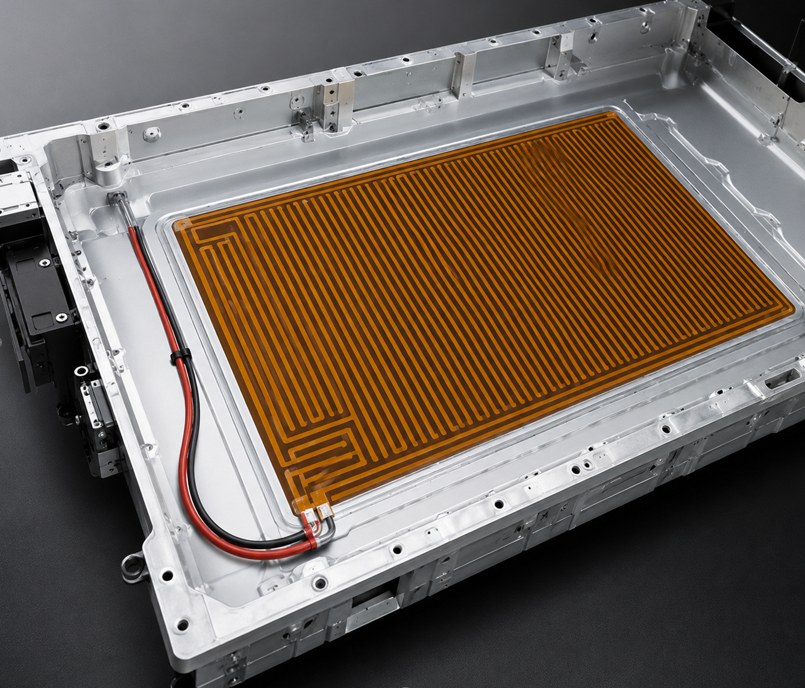 Ag-pattern printed typeFilm heater with a printed silver (Ag) heating pattern
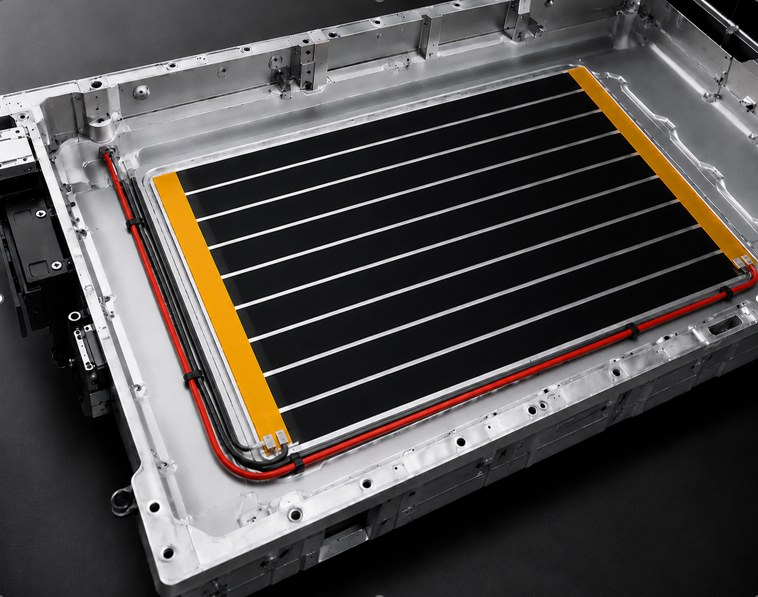 CNT surface-heating typeFilm heater whose entire CNT layer heats
A general-purpose ceramic heater with a heating circuit formed on a ceramic substrate. It can be made in many shapes and sizes, round or rectangular, and is widely used, from semiconductor and display equipment to industrial heating devices.
| Item | Details |
|---|---|
| Shape · size | Custom-made from your drawings |
| Process | Plating / Printing |
| Detailed specs | Discussed through a technical inquiry |
※ Send us your drawings or requirements (temperature, power, dimensions) and we'll review them and get back to you.
We print silver (Ag) paste on PET film to form electrode patterns. Even by printing, we can achieve fine patterns down to 100µm in width, and the fine-pattern technology refined in printing heater circuits keeps line width and thickness consistent.
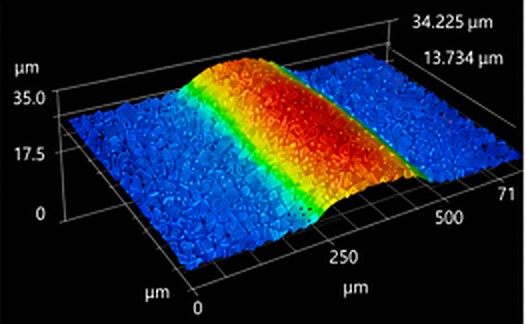
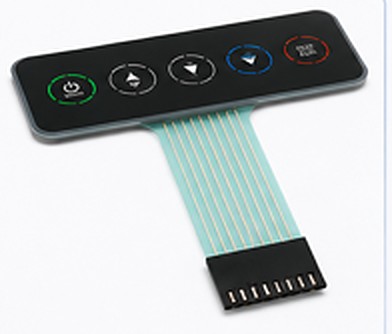
Printed electronics made by printing silver (Ag) paste electrodes on PET film. We make a wide range of sensors that need a thin, flexible film structure, including touch keypads that detect the change in capacitance when a finger touches them. With the fine-pattern technology built up in printing heater circuits, we achieve fine patterns down to 100µm by printing.
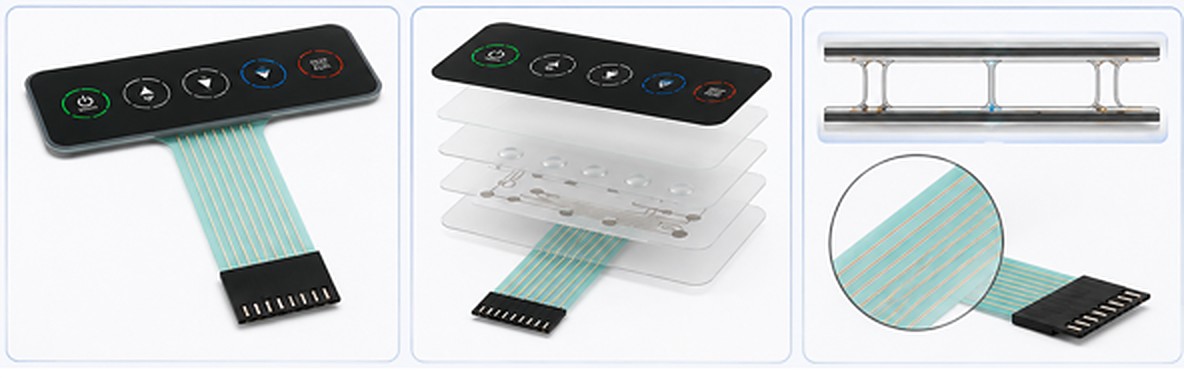
| Item | Details |
|---|---|
| Substrate | PET film |
| Electrode | Silver (Ag) paste printing |
| Minimum line width | 100µm (printed) |
| Sensing method | Capacitive (touch · gesture) |
| Shape · design | Button count, icons and outline customized |
| Detailed specs | Discussed through a technical inquiry |
※ Send us your design draft or requirements (button count, size, connector spec) and we'll review them and get back to you.
When a finger touches the surface: capacitance changes → the touch is detected → the controller performs signal processing
Just tell us your process temperature, size and power requirements. We'll help you choose, starting with the material.